In a world increasingly mindful of health and environmental impact, the humble food container has evolved beyond simple storage. For over a decade, my journey in food preservation has led me through countless innovations, from everyday plastics to artisanal ceramics. My aim is to help you navigate the vast options and pinpoint the perfect solution for keeping your food safe, fresh, and conveniently stored. Among the myriad choices, the Fresh 360 Bamboo Food Container stands out for its blend of natural appeal and practical features, aligning with a growing demand for eco-conscious kitchenware.
Food Containers: Everything You Need to Know
Food containers are essential kitchen staples designed to store, transport, and preserve food, preventing spoilage and maintaining freshness. Their evolution traces back to ancient times with materials like clay and gourds, progressing through glass, metals, and the widespread introduction of plastics in the 20th century. Today, the focus has shifted towards sustainable and health-conscious alternatives, with bamboo emerging as a prominent choice.
The market now offers a diverse array of food containers, each suited to different needs. Common types include glass for its inertness and aesthetic appeal, stainless steel for durability and heat retention, various plastics (often BPA-free) for their lightweight and affordability, and increasingly, natural materials like bamboo for their renewable nature and unique properties.
Factors to Consider When Buying a Food Container
Choosing the right food container involves more than just picking a pretty box. Several critical factors should influence your decision to ensure optimal food preservation, safety, and convenience.
Material of the Food Container
The material profoundly impacts a container’s safety, durability, and environmental footprint.
- Plastic: Lightweight and affordable, but concerns about chemical leaching (like BPA) and environmental pollution from non-biodegradable waste persist. While many are now BPA-free, their long-term impact remains a topic of debate.
- Glass: Non-porous, non-toxic, and transparent, making it excellent for visibility and preventing food odors or stains. Glass is safe for microwave and oven use (without lids) and is fully recyclable. However, it can be heavy and prone to breaking.
- Stainless Steel: Incredibly durable, lightweight, and resistant to corrosion. It’s ideal for transporting meals and is often insulated, but it’s not microwave-safe and contents aren’t visible.
- Bamboo: As a rapidly renewable resource, bamboo offers an eco-friendly alternative to traditional materials. Pure bamboo is known for being natural and not containing harmful chemicals that can leach into food. It often provides a unique aesthetic. However, it’s crucial to distinguish between pure bamboo products and bamboo composite materials, which mix bamboo fibers with plastic binders. Recent findings from the UK’s Food Standards Agency (FSA) and Food Standards Scotland (FSS) advise against plastic food contact materials containing bamboo, as they can leach chemicals like formaldehyde and melamine above legal limits, especially with hot or acidic foods. Always ensure your bamboo container is made of pure bamboo or a certified safe composite.
|
Our Picks for the Best Food Container in 2026
We may earn a commission when you use one of our links to make a purchase.
|
||
| Num | Product | Action |
|---|---|---|
| 1 | Rubbermaid Brilliance BPA Free Airtight Food Storage Containers with Lids, Set of 4 (4.7 Cup) Ideal for Lunch, Meal Prep, and Leftovers |

|
| 2 | Martha Stewart Shadowbrook 5-Piece Borosilicate Glass Storage Container Set – Airtight Locking Lids, 21.6 oz Meal Prep, Leftover & Lunch Containers, Microwave, Oven & Dishwasher Safe |
|
| 3 | Rubbermaid Brilliance Food Storage Containers BPA Free Airtight Lids Ideal for Lunch Meal Prep & Leftovers Set of 5 (3.2 Cup) |
|
| 4 | Glass Food Storage Jars with Airtight Lids – Wide Mouth Pantry Containers, Thick BPA-Free Glass, Moisture & Insect Resistant, Customizable Labels Included – 80 oz x 3 |
|
| 5 | Vtopmart 5Pack 22oz Glass Storage Containers with Lids, Glass Meal Prep Food Container Sets with Snap Airtight Lids for Microwave, Oven, Freezer and Dishwasher, Grey |
|
| 6 | Rubbermaid 60-Piece Food Storage Containers with Lids, Microwave and Dishwasher Safe, Red Color, Ideal for Meal Prep and Pantry Storage |
|
| 7 | Vtopmart 2Pack 1860ml/63oz Large Glass Storage Containers with Lids, Meal Prep Food Container Set with Snap Airtight Lid for Baking, Microwave, Oven, Leak Proof, for Freezer, Dishwasher, Grey |
|
| 8 | 60 Sets (120-Piece) Deli Containers with Lids, 32/16/8 oz X 20 Set Each, Leak-Proof & BPA Free Airtight Takeout Plastic Food Storage Containers for Soup, Freezer/Microwave/Dishwasher Safe |
|
| 9 | 50 Pack (100-Piece) 32 oz Meal Prep Containers Reusable with Easy Open Lids, Sturdy Leakproof Food Safe, Microwave Freezer Dishwasher Safe, To Go Take Out Plastic Food Storage Pans with Lids, Black |
|
| 10 | 38oz Meal Prep Containers, Extra Large &Thick Food Storage Containers with Lids, Reusable Plastic,Disposable Bento Box,Stackable,Microwave/Freezer/Dishwasher Safe, BPA Free (30Pack) |
|
When selecting a material, consider safety first. Pure bamboo, glass, and food-grade stainless steel are generally considered safer options for direct food contact. Bamboo, a natural material, is an eco-friendly option that doesn’t contain harmful chemicals found in some plastic alternatives.
Size and Shape of the Food Container
The dimensions and form of your food container significantly affect its utility and storage efficiency.
- Appropriate Capacity for Your Needs: Consider what you’ll be storing. Small containers are perfect for snacks or sauces, medium sizes for single meal portions, and larger ones for leftovers or meal prepping for families. The Fresh 360 Square Bamboo Food Container, for instance, comes in convenient sizes like 22 oz and 13.5 oz, suitable for various on-the-go meals and snacks.
- Space-Saving Shapes: Square or rectangular containers are often preferred for their stackability, maximizing refrigerator or pantry space. Round containers can be good for liquids or items that don’t need to be neatly arranged.
- Specialized Containers: Some containers are designed for specific purposes, such as bento boxes with dividers for organized lunches, soup containers with tight seals, or produce keepers designed to regulate humidity.
Airtight and Leak-Proof Capabilities
An effective seal is paramount for preserving freshness and preventing spills.
- Why Airtightness Matters: A good airtight seal minimizes oxygen exposure, which slows down food spoilage, inhibits bacterial growth, and prevents freezer burn. It also locks in flavors and aromas.
- Checking for Airtightness: Look for containers with silicone gaskets or rubber seals around the lid and secure locking mechanisms. For bamboo lids, while attractive, pure bamboo may not always be perfectly airtight on its own, and those designed for long-term food storage often incorporate a silicone seal for enhanced performance.
- Common Sealing Mechanisms: These include snap-on clips, vacuum seals, and silicone or rubber gaskets that create a tight barrier between the lid and the container body. The Fresh 360 containers feature lids, but specific airtight technology is not detailed in product descriptions.
Additional Features
Modern food containers often come with extra functionalities that enhance convenience and versatility.
- Microwave, Dishwasher, and Freezer Safe: Many containers are designed to withstand extreme temperatures, making reheating, cleaning, and long-term freezing hassle-free. The Fresh 360 Bamboo Food Container bowls are microwave and freezer safe, and can be washed in the dishwasher; however, the bamboo lids should not be put in the dishwasher as they may shrink.
- Specialized Functions: Some containers offer features like steam vents for microwave reheating, modular designs for stacking, or integrated portion dividers for meal planning.
- BPA-Free: This label indicates that the plastic components are free from Bisphenol A, a chemical that has raised health concerns. For bamboo, this isn’t usually a concern unless it’s a composite material with plastic binders.
Comparing Popular Food Container Types
Understanding the strengths and weaknesses of different materials helps in making an informed decision.
| Feature | Bamboo (Pure) | Glass | Stainless Steel | Plastic (BPA-free) |
|---|---|---|---|---|
| Material Safety | Natural, non-toxic, eco-friendly | Highly inert, non-toxic, no leaching concerns | Food-grade safe, non-reactive | Generally safe (BPA-free), but long-term use concerns |
| Durability | Durable, but can warp or crack if not cared for; lids may be less robust | Durable but breakable if dropped | Extremely durable, long-lasting | Varies by type; can warp, stain, scratch over time |
| Eco-Friendliness | Highly renewable, biodegradable | Fully recyclable, reusable | Highly recyclable, very long lifespan | Recyclable (depends on type), but slow decomposition |
| Microwave Safe | Bowls are microwave safe | Yes (container only) | No | Yes (check specific product) |
| Dishwasher Safe | Bowls are dishwasher safe; lids are handwash only | Yes | Yes | Yes (check specific product) |
| Freezer Safe | Yes | Yes | Yes | Yes |
| Visibility | Opaque | Transparent | Opaque | Often transparent |
| Airtightness | Varies; often requires silicone seal for best performance | Excellent with proper lid | Good with silicone seals | Good with locking lids and seals |
| Aesthetic | Natural, earthy, unique | Clean, modern, elegant | Sleek, industrial | Functional, varied colors/designs |
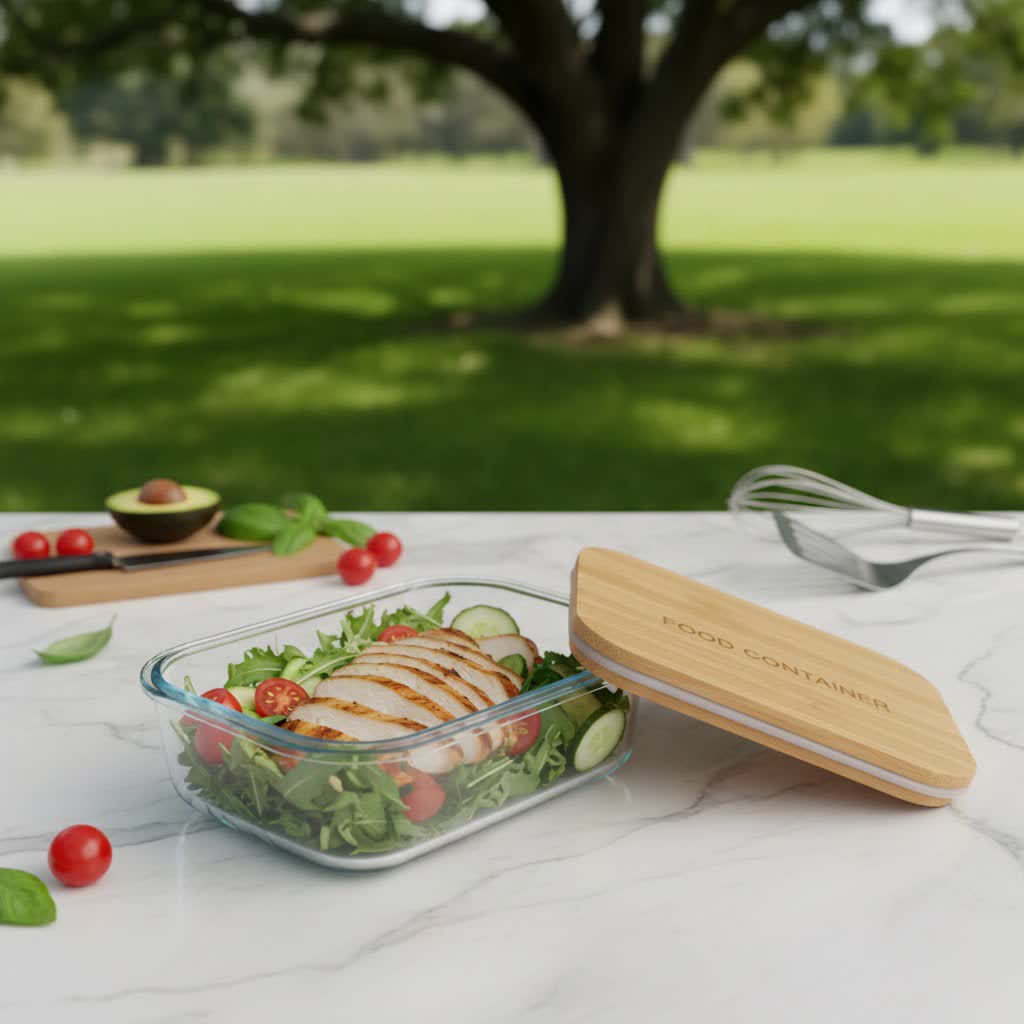
The Fresh 360 Bamboo Food Container, with its square shape and sunflower design, offers an attractive, eco-friendly alternative. Its bamboo bowls provide a non-toxic storage solution, being microwave and freezer safe. However, its lids require careful handwashing to prevent shrinking.
How to Use and Care for Your Food Container Properly
Proper use and maintenance extend the lifespan of your food containers and ensure food safety.
Cleaning Your Food Container
Regular and thorough cleaning is crucial to prevent bacterial growth and eliminate food odors.
- Handwashing vs. Dishwasher: While many container bases are dishwasher safe (like the Fresh 360 bamboo bowls), lids, especially those made of bamboo, often require handwashing. High temperatures in dishwashers can cause bamboo lids to shrink or warp. Use warm, soapy water and a soft cloth or brush.
- Safe and Effective Cleaners: Mild dish soap is usually sufficient. For stubborn stains or odors, a mixture of baking soda and water or white vinegar can be effective. Avoid abrasive scrubbers that can scratch surfaces.
- Removing Odors and Stains: For persistent smells, try placing a crumpled newspaper or a lemon wedge inside the container overnight. Sun exposure can also help neutralize odors.
Storing Your Food Container
Correct storage keeps your containers organized and in good condition.
- When Not in Use: Ensure containers and lids are completely dry before stacking and storing to prevent mold and mildew, especially for bamboo products. Store lids separately or loosely on top to allow air circulation.
- Avoid Direct Sunlight and High Heat: Prolonged exposure to direct sunlight can degrade some materials, particularly plastics, and cause bamboo to dry out or crack. Store them in a cool, dry place.
- When to Replace: Discard any containers that are cracked, heavily stained, warped, or show signs of deterioration, as these can harbor bacteria or leach chemicals. For bamboo, replace if mold appears or if it becomes overly dry and brittle.
Where to Buy Fresh 360 Bamboo Food Containers
Finding Fresh 360 Bamboo Food Containers is relatively easy, primarily through online marketplaces and retailers.
- Reputable Online Stores: You can often find Fresh 360 containers on major e-commerce platforms like eBay, Walmart, Wayfair, and Poshmark [cite: 1, 2, 3, 4 from “Fresh 360 bamboo food container where to buy”]. These platforms often feature multiple sellers, allowing for price comparison and review checking.
- Considerations for Online Purchase: Always check seller reviews, product descriptions for material composition, and return policies. Be mindful of shipping costs and estimated delivery times.
Buying Guide: Choosing the Right Food Container for Your Needs
Selecting the ideal food container depends on your lifestyle and priorities.
Determine Your Usage Needs
Start by evaluating how you’ll use the container.
- Purpose: Are you packing lunches for work, storing leftovers, meal prepping, or organizing your pantry? For on-the-go meals, consider leak-proof and durable options. The Fresh 360 containers are promoted for “fresh and eco-friendly lunch options…on the go!”.
- Capacity: How much food do you typically need to store? The Fresh 360 containers come in 22 oz and 13.5 oz sizes, offering versatility for different portion needs.
- Desired Features: Do you need microwave, freezer, or dishwasher compatibility? Remember that Fresh 360 bamboo bowls are safe for these, but their lids are handwash only.
- Safety: Always prioritize food-safe materials. Be cautious with bamboo composite materials (bamboo mixed with plastic), which have known leaching risks, especially with hot foods. Seek out products clearly stating they are pure bamboo or certified safe.
Establish Your Budget
Food containers vary widely in price based on material, brand, and features.
- Price Range: Basic plastic containers are generally the most affordable, while glass, stainless steel, and high-quality bamboo options tend to be more expensive upfront.
- Value for Money: Consider long-term value. A more expensive, durable, and safe container may save you money in the long run by reducing replacements and ensuring health.
Consult User Reviews and Expert Opinions
Learning from others’ experiences can provide valuable insights.
- Online Reviews: Read customer feedback on product pages to understand real-world performance, durability, and any potential issues. Look for comments on airtightness, ease of cleaning, and how the material holds up over time.
- Expert Recommendations: Consult reviews from trusted sources in food safety or eco-friendly living for unbiased assessments and material guidelines.
“When it comes to bamboo food containers, the devil is in the details. Always verify if it’s pure bamboo or a composite. For daily food contact, particularly with heat, pure materials are generally the safer bet.” – Dr. Sarah Chen, Environmental Health Specialist
Conclusion
Choosing the right food container is a step towards a healthier, more organized, and sustainable lifestyle. The Fresh 360 Bamboo Food Container offers a compelling option with its eco-friendly bamboo construction, versatile features like microwave and freezer safety for the bowls, and a distinct aesthetic. Remember to prioritize safety by understanding material compositions, especially the distinctions between pure bamboo and potentially harmful bamboo composites. Proper care, including handwashing bamboo lids, will ensure your containers serve you well for years to come.
What steps will you take to ensure your food storage solutions are both fresh and sustainable?
Frequently Asked Questions
Are Fresh 360 Bamboo Food Containers truly eco-friendly?
Yes, Fresh 360 Bamboo Food Containers are considered eco-friendly because they are made from bamboo, a rapidly renewable resource. Unlike plastics, pure bamboo is biodegradable and has a lower environmental impact during production and disposal.
Can Fresh 360 Bamboo Food Container lids go in the dishwasher?
No, the lids of Fresh 360 Bamboo Food Containers should not be put in the dishwasher. High temperatures can cause the bamboo lids to shrink, making them ill-fitting. It is recommended to handwash the lids to maintain their integrity.
What sizes are available for Fresh 360 Bamboo Food Containers?
Fresh 360 Bamboo Food Containers are typically available in a two-pack, offering different capacities. Common sizes include 22 oz and 13.5 oz, providing flexibility for storing various portions of food.
Are bamboo composite food containers safe?
Concerns exist regarding bamboo composite food containers, which mix bamboo fibers with plastic binders. Authorities like the UK’s FSA advise against their use for food contact, especially with hot or acidic foods, due to the potential leaching of chemicals like formaldehyde and melamine. Always opt for pure bamboo products or those certified as safe by relevant food safety agencies.