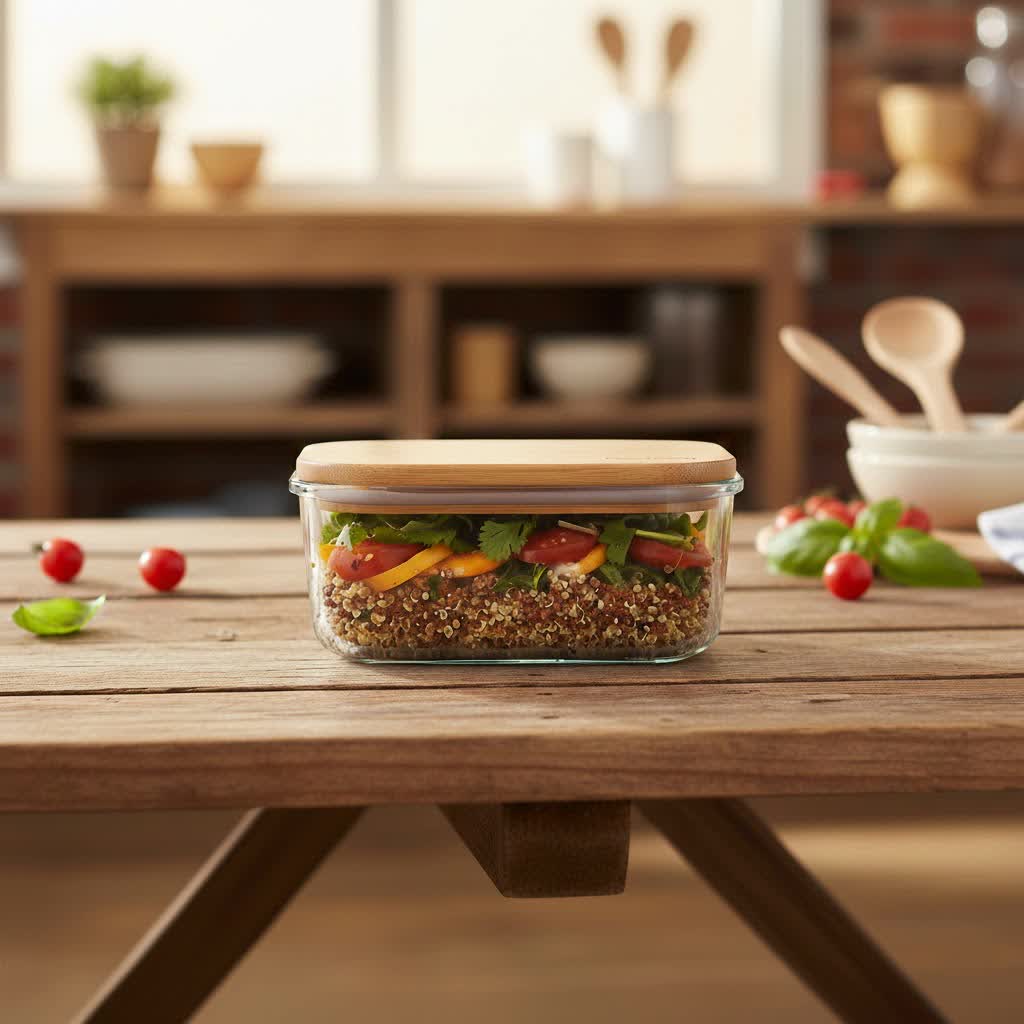
In the quest for a healthier, more organized kitchen and a sustainable lifestyle, glass food containers have emerged as an undisputed champion. Moving beyond flimsy plastics, a shift towards durable, non-toxic alternatives is evident in homes worldwide. But with countless options vying for your attention, how do you navigate the market to find the best glass food containers that truly meet your needs? This comprehensive guide will equip you with the knowledge to make an informed decision, ensuring your food stays fresh and your kitchen remains clutter-free.
Glass Food Containers: Everything You Need to Know
Glass food containers are reusable storage vessels crafted from various types of glass, designed to safely hold and preserve food. Their non-porous nature and resistance to chemicals make them a superior choice for many over traditional plastic containers. The journey of food storage has seen glass utilized for centuries, with its enduring properties making a strong comeback in modern kitchens.
Historically, glass has been a staple for preserving and storing food, a testament to its inert properties. The recent resurgence in popularity can be attributed to increased awareness of plastic’s environmental impact and potential health concerns, such as chemical leaching. Today’s glass containers combine this timeless material with modern designs and features for optimal functionality.
Types of Glass Food Containers
Glass food containers are primarily categorized by the type of glass they are made from and their functional design. Understanding these distinctions is crucial for selecting the right products.
-
By Material:
- Borosilicate Glass: Known for its exceptional resistance to thermal shock, borosilicate glass can withstand extreme temperature changes without cracking. This makes it ideal for transitioning food directly from the freezer to the oven or microwave. It’s also highly durable and less prone to scratching.
- Soda-Lime Glass (often tempered): This is the most common and cost-effective type of glass. When tempered, soda-lime glass is strengthened through a rapid heating and cooling process, making it more resistant to breakage than regular glass. If it does break, it shatters into smaller, less sharp pieces for safety. While durable, it has less thermal shock resistance than borosilicate glass.
-
By Shape and Design:
- Rectangular Containers: Excellent for maximizing space in refrigerators, freezers, and pantries, as they stack neatly. Many rectangular containers also feature flat sides, allowing for direct cutting inside.
- Square Containers: Offer a good balance between space efficiency and ease of use, often nesting well for storage.
- Round Containers: Ideal for liquids, soups, or foods with irregular shapes, and often easier to clean as they lack sharp corners.
- Divided Containers: Perfect for meal prepping, allowing you to store different food items in separate compartments within a single container.
Factors to Consider When Buying Glass Food Containers
Choosing the ideal glass food containers involves evaluating several key aspects, from the material itself to the lid’s design and overall versatility.
Material of Glass Food Containers
|
Our Picks for the Best Food Container in 2026
As an Amazon Associate I earn from qualifying purchases.
|
||
| Num | Product | Action |
|---|---|---|
| 1 | Vtopmart 5Pack 22oz Glass Storage Containers with Lids, Glass Meal Prep Food Container Sets with Snap Airtight Lids for Microwave, Oven, Freezer and Dishwasher, Grey |

|
| 2 | 38oz Meal Prep Containers, Extra Large &Thick Food Storage Containers with Lids, Reusable Plastic,Disposable Bento Box,Stackable,Microwave/Freezer/Dishwasher Safe, BPA Free (30Pack) |
|
| 3 | Rubbermaid Brilliance Food Storage Containers BPA Free Airtight Lids Ideal for Lunch Meal Prep & Leftovers Set of 5 (3.2 Cup) |
|
| 4 | 60 Sets (120-Piece) Deli Containers with Lids, 32/16/8 oz X 20 Set Each, Leak-Proof & BPA Free Airtight Takeout Plastic Food Storage Containers for Soup, Freezer/Microwave/Dishwasher Safe |
|
| 5 | Rubbermaid Brilliance BPA Free Airtight Food Storage Containers with Lids, Set of 4 (4.7 Cup) Ideal for Lunch, Meal Prep, and Leftovers |
|
| 6 | 50 Pack (100-Piece) 32 oz Meal Prep Containers Reusable with Easy Open Lids, Sturdy Leakproof Food Safe, Microwave Freezer Dishwasher Safe, To Go Take Out Plastic Food Storage Pans with Lids, Black |
|
| 7 | Glass Food Storage Jars with Airtight Lids – Wide Mouth Pantry Containers, Thick BPA-Free Glass, Moisture & Insect Resistant, Customizable Labels Included – 80 oz x 3 |
|
| 8 | Vtopmart 2Pack 1860ml/63oz Large Glass Storage Containers with Lids, Meal Prep Food Container Set with Snap Airtight Lid for Baking, Microwave, Oven, Leak Proof, for Freezer, Dishwasher, Grey |
|
| 9 | Martha Stewart Shadowbrook 5-Piece Borosilicate Glass Storage Container Set – Airtight Locking Lids, 21.6 oz Meal Prep, Leftover & Lunch Containers, Microwave, Oven & Dishwasher Safe |
|
| 10 | Rubbermaid 60-Piece Food Storage Containers with Lids, Microwave and Dishwasher Safe, Red Color, Ideal for Meal Prep and Pantry Storage |
|
The type of glass and its properties significantly impact the container’s safety, durability, and usability.
- Advantages and Disadvantages of Each Material:
- Borosilicate Glass:
- Pros: Highly resistant to thermal shock, making it safe for oven, microwave, and freezer use [cite: 1 (search 2), 2 (search 2)]. It is less likely to leach chemicals and is resistant to stains and odors [cite: 1 (search 2), 2 (search 2), 3 (search 2), 4 (search 2)]. Its high optical clarity ensures it stays clear over time.
- Cons: Generally more expensive than soda-lime glass.
- Soda-Lime Glass (Tempered):
- Pros: More affordable and widely available. When tempered, it’s durable and breaks into safer, duller pieces. It’s also non-reactive and generally safe for food storage.
- Cons: Less resistant to extreme temperature changes compared to borosilicate glass, meaning a sudden shift from hot to cold (or vice versa) can cause it to shatter.
- Borosilicate Glass:
- Health and Safety: Both borosilicate and tempered soda-lime glass are considered safe for food storage. They are non-porous, meaning they won’t absorb food particles, odors, or stains, and they do not leach harmful chemicals like BPA, phthalates, or microplastics into your food [cite: 1 (search 2), 2 (search 2), 3 (search 2), 4 (search 2), 5 (search 2)]. This ensures the purity and integrity of your stored meals.
- Durability and Ease of Cleaning: Glass containers are renowned for their longevity and resistance to degradation over time [cite: 3 (search 2)]. They are scratch-resistant and maintain their clear appearance even after repeated use and dishwasher cycles [cite: 1 (search 2)]. This non-porous surface also makes them incredibly easy to clean, often requiring just soap and water to remove any food residue [cite: 3 (search 2)].
Size and Shape of Glass Food Containers
The dimensions and form factor of your containers play a crucial role in their practicality.
- Capacity for Needs:
- Small (e.g., 1-2 cups): Ideal for individual portions, snacks, dressings, or small ingredients.
- Medium (e.g., 3-5 cups): Versatile for single-serving meals, side dishes, or storing components of a larger meal.
- Large (e.g., 6-10+ cups): Perfect for family-sized leftovers, bulk food storage, or preparing casseroles.
- Space-Saving Shapes:
- Rectangular and Square: These shapes are often preferred for their stackability and ability to utilize refrigerator and pantry space efficiently.
- Round: While less efficient for tight stacking, round containers are excellent for liquids and can be easier to clean.
- Specialized Containers: Look for sets that offer a variety of sizes and shapes to accommodate different meal types. Divided containers are particularly useful for meal prep, keeping components separate until ready to eat.
Airtight and Leak-Proof Capability
A reliable seal is paramount for food preservation and preventing messy spills.
- Importance of Airtight Seals: An airtight seal is vital for keeping food fresh longer, preventing freezer burn, and preserving flavors. It also stops odors from escaping or permeating other foods in your fridge [cite: 1 (search 2), 4 (search 2)].
- Checking for Leak-Proof Design: Look for lids with silicone or rubber gaskets and sturdy locking mechanisms or latches [cite: 1 (search 4)]. These features create a tight seal that prevents liquids from leaking, even when transporting meals on the go. Many quality glass containers undergo rigorous leak testing to ensure their reliability.
- Lid Materials: While the container itself is glass, lids are often made of BPA-free plastic with silicone seals. Some premium options offer all-glass lids with silicone rims for a completely plastic-free solution [cite: 2 (search 1)]. Ensure the lid material is also durable and easy to clean.
Additional Features
Beyond the basics, certain features enhance the functionality and convenience of glass food containers.
- Appliance Compatibility:
- Microwave-Safe: Most glass containers are microwave-safe, though lids often are not or require a steam release valve.
- Oven-Safe: Many glass containers, especially those made from borosilicate or tempered glass, can go into the oven (typically without the lid). Always check manufacturer instructions for temperature limits.
- Freezer-Safe: Glass performs well in the freezer, preventing freezer burn. Remember to allow foods to cool before freezing and avoid extreme temperature shocks (e.g., freezer directly to a hot oven) to prevent cracking [cite: 1 (search 4)].
- Dishwasher-Safe: The majority of glass containers are dishwasher-safe, simplifying cleanup. Check if the lids can also go in the dishwasher, as some require handwashing.
- Special Features: Dividers for meal separation, steam release valves on lids for microwave reheating, and nesting designs for compact storage are all valuable additions.
Comparing Popular Glass Food Container Materials
| Feature | Borosilicate Glass | Tempered Soda-Lime Glass |
|---|---|---|
| Thermal Shock Resistance | Excellent (freezer to oven safe) | Good (generally oven/freezer safe, but avoid extreme shifts) |
| Durability | Very strong, scratch-resistant | Stronger than regular glass, shatters safely |
| Chemical Leaching | None | None |
| Stain & Odor Resistance | Excellent | Excellent |
| Clarity | Maintains clarity over time | Maintains clarity over time |
| Cost | Higher | More affordable |
| Common Uses | Meal prep, baking, freezing, general storage | General storage, baking, leftovers |
Glass containers offer an undeniable advantage in maintaining food quality and kitchen hygiene. While soda-lime glass is prevalent and affordable, borosilicate glass stands out for its superior thermal shock resistance, making it the most versatile option for cooking and storage.
Proper Use and Care for Glass Food Containers
To ensure your glass food containers last for years and perform optimally, proper care is essential.
Cleaning Glass Food Containers
Keeping your containers sparkling clean is straightforward, thanks to glass’s non-porous nature.
- Handwashing vs. Dishwasher: Most glass containers are dishwasher-safe, offering a convenient cleaning method. However, check the manufacturer’s guidelines for lids, as some plastic or silicone components may be handwash-only to prevent warping or degradation. For handwashing, warm soapy water is usually sufficient.
- Safe and Effective Cleaners: Standard dish soap works perfectly. For stubborn residues, a baking soda paste can be used. Avoid abrasive scrubbers that might scratch the glass, though glass is generally scratch-resistant.
- Removing Odors and Stains: One of the best qualities of glass is its resistance to odors and stains from strong-smelling or colorful foods like curry or tomato sauce [cite: 1 (search 2), 3 (search 2)]. If a lid’s silicone seal retains a smell, a quick soak in white vinegar or baking soda solution can help.
Storing Glass Food Containers
Efficient storage helps maintain organization and extends the life of your containers.
- Storage Techniques: Many sets are designed to nest or stack, maximizing cabinet space. Store lids separately or on their respective containers to keep your kitchen tidy.
- Avoiding Direct Sunlight and High Heat: While glass itself is heat-resistant, prolonged exposure to direct sunlight can potentially degrade plastic lids or silicone seals over time. Store containers in a cool, dry place.
- When to Replace Food Containers: Inspect your glass containers periodically for cracks, chips, or damage to the edges. A compromised container can be a safety hazard. Similarly, if your lids no longer form a tight seal, it’s time to replace them to ensure proper food preservation.
Where to Buy Glass Food Containers
You have numerous options when it comes to purchasing the best glass food containers.
- Reputable Retailers:
- Online Marketplaces: Websites like Amazon, Wayfair, and other major online retailers offer a vast selection from various brands, often with user reviews to guide your choice.
- Department Stores: Stores such as Macy’s, Target, and Walmart typically carry well-known kitchenware brands.
- Specialty Kitchen Stores: Stores like Williams Sonoma or Crate & Barrel offer higher-end, curated collections of food storage solutions.
- Buying Online: Offers convenience and a wider selection, but always check return policies and read product descriptions carefully.
- Consider Brand Reputation: Brands like Pyrex, Glasslock, Rubbermaid Brilliance Glass, OXO Good Grips, and Anchor Hocking are frequently cited in “best of” lists for their quality and reliability [cite: 1 (search 1), 2 (search 1), 3 (search 1), 4 (search 1)].
Buying Guide: Choosing the Right Glass Food Containers for Your Needs
Making the right choice involves a personalized approach, aligning containers with your specific kitchen habits.
Determine Your Needs
Start by evaluating how you plan to use your glass food containers.
- Purpose: Are you primarily storing leftovers, meal prepping for the week, packing lunches, or baking directly in the containers? Your intended use will dictate the ideal sizes, shapes, and features. For instance, divided containers are excellent for meal prep, while larger rectangular ones are great for casseroles.
- Capacity: Consider the typical portion sizes you need. A family of four will likely require larger containers than a single individual.
- Key Features: Do you need them to be oven-safe, freezer-safe, or highly stackable? Prioritize features that align with your daily routine.
Set Your Budget
Glass food containers represent an investment, but their longevity often makes them cost-effective in the long run.
- Price Range: Prices vary significantly based on brand, set size, and glass type (borosilicate often being more expensive). A basic set can range from $30-$60, while premium or larger sets can go upwards of $100-$200.
- Long-Term Value: While the initial cost might be higher than plastic, the durability, reusability, and health benefits of glass offer excellent value over many years, reducing the need for frequent replacements.
Consult User Reviews
Leverage the experiences of other users to inform your decision.
- Reading Reviews: Check reviews on retailer websites and reputable product review sites. Pay attention to comments regarding lid durability, leak-proof performance, ease of cleaning, and how the containers hold up over time.
- Seeking Recommendations: Ask friends, family, or online communities for their preferred brands and sets. Real-world feedback can offer invaluable insights.
Conclusion
Investing in the best glass food containers is a smart decision for any modern kitchen. Their superior food preservation, non-toxic composition, unparalleled durability, and environmental benefits make them an essential upgrade from traditional plastic options. By considering factors like glass material, lid design, size, and compatibility with your appliances, you can confidently select a set that will serve your household efficiently and sustainably for years to come. Take the time to assess your unique needs and explore the wide range of high-quality options available. What will you store in your new glass food containers?
Pet products vetted on real animals
Free PDF — protein DMB calculator + 18 dog foods rated.
