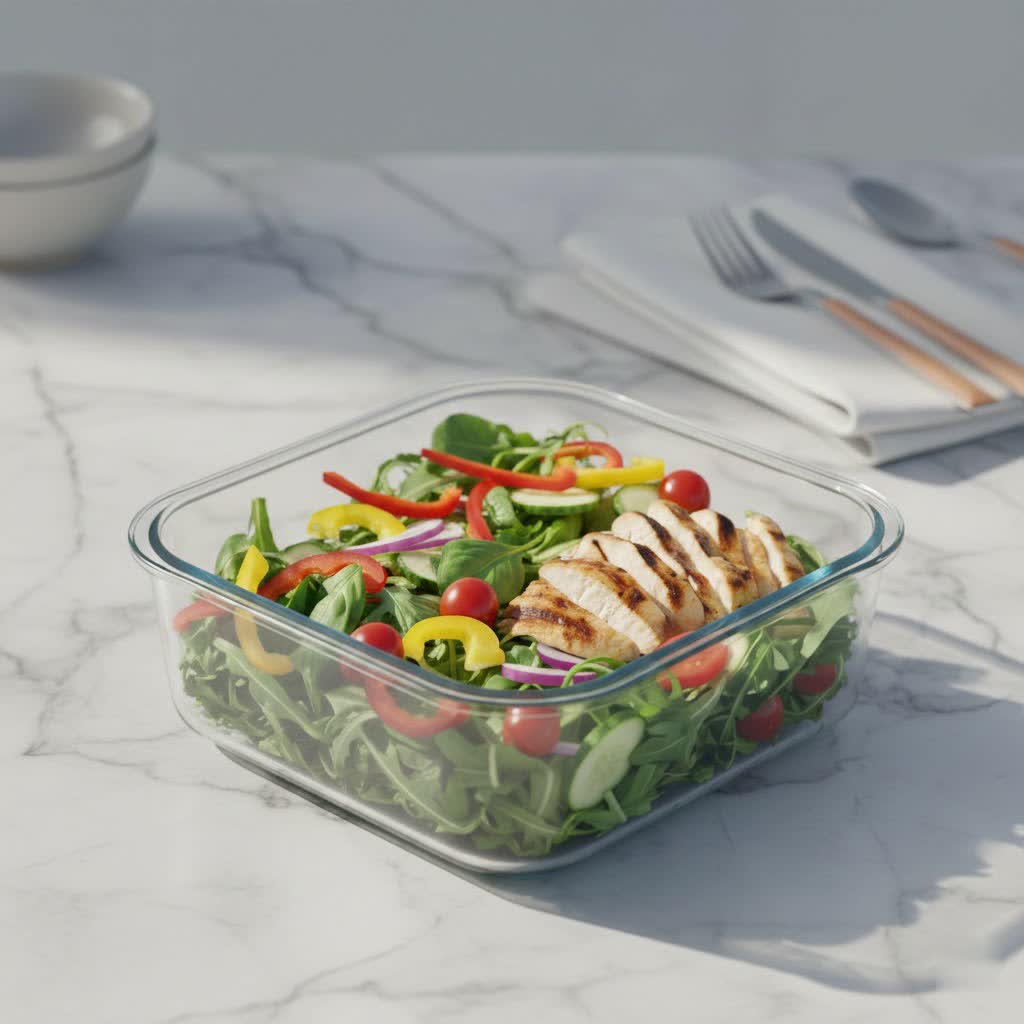
In our fast-paced lives, enjoying a warm, homemade meal on the go often feels like a luxury. You’ve likely experienced the disappointment of a cold lunch or lukewarm soup, a common frustration for many. The solution lies in the innovative design of thermal food containers – essential tools that promise to keep your culinary creations at their ideal temperature for hours, whether you crave hot comfort food or a crisp, cool salad. With over a decade of experience in food storage solutions, understanding these containers can improve your mealtime experience, offering both convenience and peace of mind.
What is a Thermal Food Container?
A thermal food container, often referred to as an insulated food jar or food flask, is specifically engineered to maintain the temperature of its contents over an extended period. Unlike regular food storage containers, these specialized vessels employ scientific principles to minimize heat transfer, keeping hot foods hot and cold foods cold.
The concept dates back to Scottish physicist and chemist Sir James Dewar, who invented the vacuum flask in 1892. Modern thermal food containers build on this principle, utilizing advanced insulation technologies. At their core, these containers work by inhibiting the three main ways heat transfers:
- Conduction: Direct transfer of heat through solid materials.
- Convection: Heat transfer through the movement of liquids or gases.
- Radiation: Transfer of heat through electromagnetic waves.
Most high-performing thermal food containers feature a double-wall construction with a vacuum-sealed space between the inner and outer layers. This vacuum is highly effective at preventing heat transfer by conduction and convection. Many designs incorporate reflective coatings on the inner walls to bounce radiant heat back towards the food, further enhancing temperature retention. The lid, often equipped with a robust sealing ring, plays a critical role in preventing heat from escaping or entering.
Today, thermal food containers come in various types, including compact food jars perfect for individual servings of soup or stew, larger bento-style insulated boxes with multiple compartments, and even soft-sided insulated bags designed to hold several containers. While some simpler insulated bags use foam or reflective foil, the most effective and durable thermal containers typically rely on vacuum insulation in conjunction with robust materials.
Key Factors When Choosing a Thermal Food Container
Selecting the right thermal food container requires careful consideration of several elements to ensure it meets your specific needs. From the materials it’s made from to its practical features, each aspect contributes to its overall performance and user experience.
Material of the Thermal Food Container
|
Our Picks for the Best Food Container in 2026
As an Amazon Associate I earn from qualifying purchases.
|
||
| Num | Product | Action |
|---|---|---|
| 1 | 60 Sets (120-Piece) Deli Containers with Lids, 32/16/8 oz X 20 Set Each, Leak-Proof & BPA Free Airtight Takeout Plastic Food Storage Containers for Soup, Freezer/Microwave/Dishwasher Safe |

|
| 2 | 38oz Meal Prep Containers, Extra Large &Thick Food Storage Containers with Lids, Reusable Plastic,Disposable Bento Box,Stackable,Microwave/Freezer/Dishwasher Safe, BPA Free (30Pack) |
|
| 3 | Martha Stewart Shadowbrook 5-Piece Borosilicate Glass Storage Container Set – Airtight Locking Lids, 21.6 oz Meal Prep, Leftover & Lunch Containers, Microwave, Oven & Dishwasher Safe |
|
| 4 | 50 Pack (100-Piece) 32 oz Meal Prep Containers Reusable with Easy Open Lids, Sturdy Leakproof Food Safe, Microwave Freezer Dishwasher Safe, To Go Take Out Plastic Food Storage Pans with Lids, Black |
|
| 5 | Vtopmart 2Pack 1860ml/63oz Large Glass Storage Containers with Lids, Meal Prep Food Container Set with Snap Airtight Lid for Baking, Microwave, Oven, Leak Proof, for Freezer, Dishwasher, Grey |
|
| 6 | Rubbermaid Brilliance Food Storage Containers BPA Free Airtight Lids Ideal for Lunch Meal Prep & Leftovers Set of 5 (3.2 Cup) |
|
| 7 | Vtopmart 5Pack 22oz Glass Storage Containers with Lids, Glass Meal Prep Food Container Sets with Snap Airtight Lids for Microwave, Oven, Freezer and Dishwasher, Grey |
|
| 8 | Glass Food Storage Jars with Airtight Lids – Wide Mouth Pantry Containers, Thick BPA-Free Glass, Moisture & Insect Resistant, Customizable Labels Included – 80 oz x 3 |
|
| 9 | Rubbermaid Brilliance BPA Free Airtight Food Storage Containers with Lids, Set of 4 (4.7 Cup) Ideal for Lunch, Meal Prep, and Leftovers |
|
| 10 | Rubbermaid 60-Piece Food Storage Containers with Lids, Microwave and Dishwasher Safe, Red Color, Ideal for Meal Prep and Pantry Storage |
|
The material directly impacts a container’s insulation efficiency, durability, and safety.
- Stainless Steel: This is the most prevalent and highly recommended material for thermal food containers, particularly 18/8 (304) or 18/10 (316) food-grade stainless steel.
- Pros: Exceptional thermal insulation (especially with vacuum double-wall), highly durable, corrosion-resistant, non-reactive with food, generally BPA-free, and easy to clean. Grades 304 and 316 meet rigorous food safety standards, minimizing the leaching of impurities. Grade 316 often offers superior chemical resistance.
- Cons: Can be heavier than plastic, not microwave-safe.
- Glass: Some thermal containers may incorporate glass components, often for inner food contact surfaces.
- Pros: Non-toxic, BPA-free, stable, and can be recycled. Offers a clear view of contents.
- Cons: Heavy, fragile, and not ideal for portability where drops are a risk. Less effective as the primary insulating layer.
- Plastic (Food-Grade & BPA-Free): Used for lids, seals, or outer casings, especially when combined with stainless steel interiors. Some insulated bags use high-density foam or polypropylene.
- Pros: Lightweight, versatile in design, often more affordable.
- Cons: Not all plastics are food-grade or BPA-free, and some may retain odors. Less insulating on its own compared to vacuum-sealed stainless steel. Disposable foam or paper options, while sometimes insulating, are generally not reusable, can contain chemicals, and pose environmental concerns.
For safety and longevity, always prioritize thermal containers made from high-quality food-grade stainless steel and ensure any plastic components are certified BPA-free.
Size and Shape of the Thermal Food Container
The capacity and design of your container should align with your eating habits and how you plan to transport it.
- Capacity: Thermal food containers range from small 8-ounce (250 ml) jars perfect for snacks or baby food, to larger 24-ounce (700 ml) or even 32-ounce (1-liter) options suitable for hearty main courses, soups, or multiple servings. Consider if you’re packing a full meal, a side dish, or just a hot beverage.
- Shape:
- Wide-Mouth Jars: Excellent for easy filling, eating directly from the container, and cleaning. Ideal for chunky stews, pasta, or salads.
- Tall, Narrow Designs: Better for liquids like soup or beverages, and may fit more easily into backpack side pockets.
- Bento-Style: Offers multiple, often separate, compartments for different food items, keeping them organized and preventing mixing. Some come with their own insulation.
- Compact Designs: Look for containers that fit comfortably in lunch bags, backpacks, or car cup holders if portability is key.
Airtightness and Leak-Proof Design
A secure seal is paramount not only for preventing messy spills but also for maintaining temperature. Any gap allows heat to escape (or enter).
- Importance: A truly airtight and leak-proof seal minimizes heat transfer and ensures that liquids like soups or sauces stay contained, protecting your bag and other belongings.
- How to Check: Look for lids with robust silicone gaskets and reliable locking mechanisms. Some lids feature a pressure release button for easy opening after vacuum sealing.
- Common Seals: Twist-on lids are common, often paired with a silicone ring. Some containers utilize clip-on latches for added security.
Additional Features
Modern thermal food containers often come with features that enhance convenience and functionality.
- Microwave, Dishwasher, Freezer Safety: While the stainless steel body is never microwave-safe, some containers have removable inner plastic compartments that can be microwaved. Always check manufacturer instructions for dishwasher compatibility, as hand washing is often recommended for longevity, especially for lids and gaskets. Many are freezer-safe, though extreme cold can affect the integrity of seals over time.
- Built-in Utensils: Some models include a foldable spoon or spork that stores neatly in the lid, eliminating the need to pack separate cutlery.
- Dividers and Compartments: Useful for keeping different food items separate and preventing flavors from mingling.
- Handles or Carrying Straps: Enhance portability, especially for larger containers.
- Vent Valves: For hot foods, a small vent valve can release steam, making the container easier to open and preventing a vacuum seal that’s too strong.
Comparing Popular Thermal Food Containers
The market offers a diverse range of thermal food containers, each with its strengths. While specific brands offer various models, we can generalize their characteristics based on common types:
| Feature | Vacuum-Insulated Stainless Steel Food Jar | Insulated Bento Box (Stainless Steel/Plastic Hybrid) | Soft-Sided Insulated Lunch Bag (with inserts) |
|---|---|---|---|
| Material | Double-wall 18/8 or 18/10 food-grade stainless steel; BPA-free plastic lid/gasket | Outer shell (plastic/stainless steel), insulated layers (foam), inner food containers (stainless steel/BPA-free plastic) | Fabric exterior, foam insulation, reflective lining; often requires separate containers |
| Capacity Range | 10 oz – 32 oz (300 ml – 1 liter) | Varies; often 2-4 compartments, total 16 oz – 50 oz (500 ml – 1.5 liters) | Highly variable, designed to hold multiple separate containers |
| Heat Retention | Excellent (5-10 hours, depending on model and pre-heating) | Good (3-6 hours, depends on quality of insulation and inner containers) | Moderate (2-4 hours, depends on number/quality of ice packs/hot packs) |
| Cold Retention | Excellent (7-12 hours, depending on model and pre-chilling) | Good (4-7 hours, depends on quality of insulation and inner containers) | Moderate (3-5 hours, depends on number/quality of ice packs/cold packs) |
| Key Features | Wide mouth, leak-proof lid, often integrated spoon/cup lid | Multiple compartments, stackable, sometimes with a carrying handle | Flexible, lightweight, often collapsible, extra pockets for utensils |
| Pros | Best for single-item hot/cold meals, highly durable, reliable temperature retention | Organized meals, good for varied packed lunches, often comes with separate containers | Very portable, adaptable to different container sizes, easy to store when empty |
| Cons | Single compartment, can be bulky, not suitable for complex meals | Can be heavier/bulkier than jars, inner containers may not be insulated themselves | Relies on external cold/hot packs, limited insulation without inner thermal containers |
“The evolution of thermal food containers has truly revolutionized meal prep and portability. From basic vacuum flasks to multi-compartment bento boxes, the focus remains on keeping food safe and enjoyable, no matter where your day takes you.”
Proper Use and Care of Your Thermal Food Container
To ensure your thermal food container performs optimally and lasts for years, proper usage and diligent cleaning are essential.
Cleaning Your Thermal Food Container
Regular and thorough cleaning prevents bacteria buildup, odors, and staining, preserving the container’s hygiene and effectiveness.
- Daily Cleaning: After each use, disassemble all parts (lid, body, gaskets) and wash them immediately with warm, soapy water. Use a soft sponge or bottle brush for the interior. Rinse all components thoroughly with clean water and allow them to air dry completely before reassembling or storing.
- Stubborn Stains and Odors:
- For Oily Residue: Sprinkle baking soda directly onto oily stains, let it sit for 5-10 minutes, then scrub gently with a soft brush or sponge. Baking soda is a natural degreaser.
- For Lingering Odors: A paste of baking soda and water or a solution of white vinegar (1:2 ratio with warm water) can help neutralize odors. Allow it to sit for a while, then rinse thoroughly. Sun-drying disassembled parts can also help.
- For Light Mold Spots: Spray a mixture of white vinegar and warm water (1:2 ratio) on the affected area, let it sit for a few minutes, then wipe with a soft cloth.
- What to Avoid:
- Abrasive Cleaners or Scrubbers: These can scratch the stainless steel finish and compromise its protective layer, potentially reducing insulation and making it prone to corrosion.
- Bleach or Chlorine-Based Cleaners: These harsh chemicals can damage stainless steel and gaskets, leading to corrosion and weakening the seal.
- Dishwasher Use: While some manufacturers claim “dishwasher-safe,” hand washing is generally recommended for all parts, especially gaskets and intricate lid components. High heat and harsh detergents in dishwashers can degrade seals and affect the container’s appearance and thermal performance over time.
Maintenance and Storage of Your Thermal Food Container
Good maintenance practices extend the life of your container and ensure consistent performance.
- Pre-heating for Hot Foods: To maximize heat retention, pre-heat your thermal container. Fill it with boiling water, secure the lid, and let it stand for 5-10 minutes. Empty the hot water just before adding your hot food.
- Pre-chilling for Cold Foods: Similarly, for cold foods, pre-chill the container by filling it with ice water for 5-10 minutes before adding your chilled food.
- Thorough Drying: Always ensure all parts are completely dry before storing to prevent mold or mildew growth and to maintain hygiene.
- Store with Lid Open: Store the container with the lid slightly ajar or completely off to allow air circulation and prevent moisture and odors from being trapped inside.
- Avoid Extreme Temperatures: Do not place the container in a microwave or conventional oven, as this can damage the vacuum seal and the container itself. Avoid exposing it to prolonged direct sunlight or extreme heat when empty.
- Inspect Gaskets: Regularly check the silicone gaskets on the lid for signs of wear, discoloration, or hardening. A damaged gasket can compromise the seal and lead to leaks or reduced thermal efficiency. Many manufacturers offer replacement gaskets.
- Do Not Leave Food for Extended Periods: While designed for temperature retention, food should not be left in the container for more than 24 hours to ensure food safety.
Where to Buy Thermal Food Containers?
Finding the right thermal food container is easier than ever with numerous options available.
- Online Retailers: E-commerce giants like Amazon, Walmart, Target, and specialty kitchenware sites offer a vast selection from various brands, often with detailed product descriptions and user reviews.
- Department Stores: Major department stores typically have kitchenware sections that stock a range of thermal food containers.
- Specialty Kitchen and Outdoor Stores: Stores focusing on cooking, home goods, or outdoor gear (like camping and hiking supplies) often carry higher-end or specialized thermal containers.
- Brand Websites: Many reputable brands sell directly from their own websites, sometimes offering exclusive models or colors.
When purchasing, always check the product specifications for material composition, insulation claims, and care instructions. Look for certifications like “food-grade” or “BPA-free” and consider the warranty offered by the manufacturer. Reading recent user reviews can also provide valuable insights into real-world performance and durability.
Buying Guide: Choosing the Right Thermal Food Container for Your Needs
Navigating the wide array of thermal food containers can be daunting. By following a structured approach, you can confidently select a product that perfectly aligns with your lifestyle.
Determine Your Usage Needs
Start by clarifying how you intend to use the container.
- What will you carry? Soups, stews, pasta, salads, yogurt, baby food, or a full multi-course meal? This will dictate the required capacity and whether you need multiple compartments.
- How long do you need it to stay hot/cold? A short commute to work requires less retention than a full day hike or picnic. Look for containers with specified temperature retention times (e.g., “keeps hot for 6 hours, cold for 10 hours”).
- Who is it for? An adult’s hearty lunch might need a larger, more robust container, while a child’s lunch might benefit from a smaller, easy-to-open, and brightly colored option.
- Where will you use it? Office, school, outdoor activities, travel? This impacts the importance of portability, durability, and leak-proof design.
Set Your Budget
Thermal food containers vary significantly in price, influenced by brand, material quality, size, and features.
- Price Range: Basic models might cost $15-$30, while premium, high-performance containers from renowned brands can range from $30-$70 or more.
- Investment vs. Cost: Consider this an investment in healthier eating, cost savings from packed lunches, and environmental responsibility. A higher initial cost often translates to superior insulation, greater durability, and a longer lifespan.
Refer to User Reviews and Expert Opinions
Leverage the experiences of others to inform your decision.
- Online Reviews: Read customer reviews on retail websites. Pay attention to comments regarding temperature retention, leak-proof performance, ease of cleaning, and overall durability. Look for common praises and complaints.
- Expert Reviews: Consult independent product review sites and consumer publications for detailed tests and comparisons of different models.
- Word-of-Mouth: Ask friends, family, or colleagues for their recommendations based on personal experience.
By systematically evaluating these factors, you can narrow down your choices and find a thermal food container that becomes an indispensable part of your daily routine.
Conclusion
Thermal food containers are far more than just simple storage; they are a gateway to healthier eating, significant cost savings, and a more environmentally conscious lifestyle. By use the power of advanced insulation, these ingenious vessels allow you to enjoy your favorite meals at their optimal temperature, wherever you are. Whether you’re savoring a piping hot lunch at your desk or a refreshing salad on a hike, a reliable thermal food container ensures your food remains delicious and safe for hours. Embracing a quality thermal food container means investing in convenience, health, and sustainability. What culinary adventure will your perfectly preserved meal accompany you on next?
Frequently Asked Questions
How long can a thermal food container typically keep food hot or cold?
Most high-quality thermal food containers, especially those with double-wall vacuum insulation, can keep food hot for 5 to 7 hours and cold for 7 to 12 hours. Pre-heating or pre-chilling the container before adding food significantly extends these times.
Are thermal food containers safe to use in the microwave?
No, stainless steel thermal food containers are never safe for microwave use. The metal can cause sparks and damage the microwave oven. If your container has removable plastic components, those might be microwave-safe, but always check the manufacturer’s instructions.
What is “food-grade stainless steel” and why is it important?
Food-grade stainless steel, typically 18/8 (304) or 18/10 (316), refers to alloys that are safe for contact with food. These grades are resistant to corrosion, chemically stable, and designed to not leach harmful substances into food, ensuring both safety and durability.
Can I put my thermal food container in the dishwasher?
While some parts might be labeled “dishwasher-safe,” hand washing is generally recommended for all components of a thermal food container. Dishwasher detergents and high heat can degrade seals and gaskets over time, potentially reducing the container’s thermal efficiency and leak-proof quality.
How do I prevent my thermal food container from developing odors?
To prevent odors, always wash your container thoroughly with warm, soapy water immediately after use. Disassemble all parts, including gaskets, for cleaning. For stubborn odors, use baking soda or a white vinegar solution, and ensure all parts are completely dry before storage, ideally with the lid open for ventilation.
What’s the best way to maximize the temperature retention of my thermal food container?
For hot food, pre-heat the container by filling it with boiling water for 5-10 minutes, then empty before adding your hot meal. For cold food, pre-chill with ice water. Ensure the lid is tightly sealed immediately after filling to minimize heat transfer.
Pet products vetted on real animals
Free PDF — protein DMB calculator + 18 dog foods rated.
